Sunday, December 27, 2015

Another online game platform (but this one may be the best one yet for promoting mastery learning)

In a perfect world, we would monitor each student's learning and growth by name and need.  One student may need help with mastering causes of the War of 1812.  Another can't remember the 3/5 Compromise.  How to structure instruction so that each student's individualized needs are met?

A free online game platform that could certainly help is called BrainRush.
BrainRush allows you (or your students) to create learning games that adapt to the learning skill of each player.  To learn about BrainRush I took one of the activities that they had prepared on the Civil Rights Movement.  Whenever I answered a question incorrectly (whoops), that question was pushed back into the deck of upcoming questions.  It was then repeated in a different way several times, giving me extra chances to become confident in the correct answer and demonstrate my mastery.

This video (1:23) gives you a good short introduction to how BrainRush works.
BrainRush has four learning-game formats:
  1. Cards Template: Just like flashcards.  Great for vocabulary; students match the front to the back of cards.
  2. Buckets Template: A categorization activity; students drop and drag text, images, and/or audio into the correct bucket.
  3. Sequencing Template: A chronology or list-order activity; students drag and drop items in order.
  4. Hotspots Template: Students are presented with one image containing 10-15 hotspots, each one corresponding to a different concept to learn.  They match the concept to the hotspot on the map.  Hotspots Templates are best for diagrams and maps.
The last template was the most fun to create and play.  For my practice I uploaded a blank outline map of the contiguous 48 states, and created four hotspots.  I then associated a concept (like the Missouri Compromise Line) to each hotspot.

Playing my activity as a student, I was first shown the image (the map) with the four hotspots I had created.  My first concept was in the left margin, and in the first round, I had to click on the correct hotspot to demonstrate mastery.  Later in the Round 2 I was shown a hotspot and asked to type the correct concept in a dialogue box.

What was great was that I could not complete the activity until I gave correct answers to every concept.  And the activity was personalized for my learning.  Every time I made a mistake, questions about that topic were repeated (several times, interspersed with other questions) until I got it correct several times in a row.

Once you create your activity you post it to the online classroom that you create for your students.

One thing that's great about BrainRush is the amount of online teacher support it gives.  It currently has 9 general video tutorials and three other describing BrainRush's game templates.

BrainRush makes creating engaging and effective activities that promote individualized mastery learning that much more achievable.

Saturday, December 26, 2015

PBS is looking for America's most innovative, tech-savvy educators

PBS sponsors a program that recognizes teachers who use digital media in their classrooms and are educational technology leaders.  It's called their PBS LearningMedia Digital Innovators program, and you can apply to participate in this program for the 2016-2017 school year.  Applications are due by February 8 at 9:59pm EST.
The application process is easy.  Just create one short video, answer two short essay questions, and complete an application.  And here's the best part: if you submit a complete application by the deadline, you will automatically be invited to join the program!  Benefits of applying include one year of free PD opportunities, invitations to special events, and other benefits.

From that self-selected group, PBS LearningMedia will select 54 teachers to serve as Lead Innovators.  This group will receive a 3-day, all-expense paid trip to Denver to participate in a conference on June 25 and 26, and to attend the ISTE conference on June 27.  They will also receive a Samsung Galaxy tablet.

Here's a video one Digital Innovator submitted last year as part of his application.

Best Websites for Teaching and Learning 2015

Right now there are about 1-billion websites, give or take 50-million.  Which ones are most engaging and rewarding for our students?  Thankfully, a highly-respected authority has already done the scouting for us.

The American Association of School Librarians publishes an annual list of its best websites for teaching and learning.  The sites it recognizes
foster the qualities of innovation, creativity, active participation, and collaboration.  They are free, web-based sites that are user friendly and encourage a community of learners to explore and discover. 
One particularly cool website on the list is called WhatWasThere.  That site uses Google Maps to explore what a location used to look like.  I used the site to compare one intersection near my home.  It displayed a photo taken during the 1860s with a Google Street View of what the intersection looks like now.  It was fascinating to compare the two.  WhatWasThere also offers an accompanying iPhone app.
All told, this year's AASL list has 25 sites on it.  With a list that comprehensive it's hard to know where to start.  But by focusing on just one new site per week we would be able to introduce our students to a new type of engagement weekly, almost until the end of this school year.

Friday, December 25, 2015

A free app that nicely complements Remind.com

I use Remind with my students and I love it.
Image result for remind.com
Remind creates a whole new communication stream with my students that transcends the 90 minutes we have face-to-face with each other every other day.  When I send them a text message I know that they received it on their phone instantly.

I use it sparingly, however.  I want my students to be responsible to check our class Assignment Calendar (a Google Calendar linked from our class Blackboard site) on their own initiative.  For that reason I use Remind only to announce that I've posted a new assignment, or have made changes to previously-posted assignment deadlines.

The consequence of my policy is completely foreseeable: Students forget (or neglect) to check the Calendar, and consequently forget that they have a project due at the end of the week or a quiz tomorrow.

The ideal solution would be to push to the students the obligation of monitoring their due dates using a more efficient and effective platform.  The WhatsDue app just might be that ideal solution.
Image result for whatsdue app
WhatsDue is a free app for students (and their parents).  WhatsDue lets teachers create a to-do list of upcoming due dates that students can access from their devices.

Teachers register with WhatsDue and share a join-code for each class with their students and parents.  From the teacher dashboard, they then record each assignment and when it is due.

Registered users then get push notifications of upcoming due dates that are added to a clear display on their devices.  This picture shows an example of how that looks:

In this example, the student has six assignments due.  One (the Homework to "Do Assignment 3") is marked in red because it is due tomorrow.  The other assignments are listed in the order in which they are due.

I'll keep using Remind to alert my students to schedule changes.  But WhatsApp seems to go further in helping my students manage their assignments than simply using Remind alone, so I'm going to roll this out on the first day back from winter break.  Even better: Could you imagine how cool it would be if all teachers throughout your building used WhatsDue?  I'll work on promoting that as well.

Another alternative to PowerPoint

This might be the coolest presentation package that I've seen yet.

I have already blogged my thoughts about this topic.  If you want to stick with your existing PowerPoint presentations, you can make them interactive by uploading them to nearpod and then your students can watch them on their devices and respond to questions that you embed.

If you want alternatives to PowerPoint entirely, you can make presentations with either prezi or emaze.

But this presentation package was entirely new to me.  It's called PowToon.  PowToon's banner says that "It's free and it's awesome."  I concur as to both.

PowToon makes animated videos and presentations.  I could write paragraphs describing what it does but it would be much better for you to see two short examples.  Both were created with PowToon.
Want more more encouragement about PowToon's awesomeness?  PowToon was named one of the best websites for teaching and learning by the American Association of School Librarians in 2014.  Here's what they said:
Powtoon is ideal for those seeking a nice alternative to more traditional presentation tools. Simple to use, it makes creating engaging, interesting, and exciting animated videos extremely easy. Users can create and show presentations straight from the Powtoon site, or opt for the export to Youtube option, or even download a MP4 video format for use offline.
PowToon has a set of tutorials on its QuickStart Guide page.  I also like this tutorial (6:55).

The PowToon animations are so cool that I will be assigning them to my students to use.  Why should I have all the fun?

A new online quiz-game platform

Which online quiz-game platform do you use with your students?

Kahoot is very popular, and recently I've been experimenting with quizizz.  Both are easy to use and engaging for students.

But I just recently learned of a new platform called Triventy.
I've been giving Triventy a test-drive over the break and have been favorably impressed.  Creating a game is easy, the template for writing questions is straight-forward, you can add images to your questions, it has sound effects as you play, you can limit the time to answer each question, and it's easy to share your activities with your students.  And did I mention that it's free?

My friend and teaching colleague George Coe (Twitter: @ggcoe) also adds that teachers can invite others (like our students) to write questions for a game.  Great idea to increase student engagement.

How new is Triventy?  As of this writing they have just 15 followers on Twitter.  It's so new that there are no video tutorials yet.  But here's a link to Triventy's very easy-to-read printed instructions.

I'm sure that Triventy's Twitter followers will grow and that more help materials will become available soon.  You can follow Triventy on Twitter: @Triventy


A great way to introduce the Iranian Hostage Crisis to your students

On November 4, 1979, the U.S. Embassy in Tehran, Iran, was stormed by Iranians opposed to America's support for Iran's leader, Shah Mohammed Reza Pahlavi.
Iranian students climb over the wall of the U.S. embassy in Tehran on November 4, 1979.
Iranian students scaling a security fence outside the U.S. Embassy in Tehran, Iran.
American diplomats and members of the U.S. military were captured and taken hostage.  Many of them were held in captivity until their release on January 20, 1981, 444 days later.
American hostage shown outside the U.S. Embassy in Tehran, Iran.

(The movie "Argo" told a related but different story, about the six Americans who fled from the embassy on Nov. 4, took refuge in the home of the Canadian ambassador, and were later "exfiltrated" by the CIA.)

We will certainly discuss the Iranian Hostage Crisis when we're discussing Jimmy Carter's presidency later this spring.  A good way to introduce that topic is to share with them this story (Americans Held Hostage in Iran Win Compensation 36 Years Later) in yesterday's New York Times.

Included in a recent budget agreement, Congress decided to give $4.4-million to the surviving Iranian hostages or their survivors.  Apparently, the same agreement that the United States had reached with Iran winning the hostages' release also barred them from seeking any payments for their capture, torture, or captivity.  The budget deal now created an avenue to remedy that injustice.

Read the Times story with your students, then ask them to make a timeline of the Iranian Hostage Crisis based on information from that story.  Then share with them these online resources to add additional information to their timelines.


Alternatively, the UMBC Center for History Education has a terrific lesson plan on the crisis based on primary sources.

Thursday, December 24, 2015

Who should be on the new $10 bill? (Here's my vote)


America's first Secretary of the Treasury, Alexander Hamilton, is currently featured on the $10 bill.  But the Treasury Department announced this past June that it would change out Hamilton's portrait and put a woman on a redesigned $10 bill.  The new bill will enter circulation in 2020, to coincide with the 100th anniversary of ratification of the 19th (women's suffrage) amendment to the U.S. Constitution.

First, a little historical context about naming $10 bills.  The Treasury issued its first $10 Demand Notes during the Civil War, and featured President Lincoln's portrait.

The first $10 Federal Reserve note was issued in 1914 and featured a portrait of President Andrew Jackson.

Hamilton replaced Jackson on the $10 bill in 1929.

My vote to replace Alexander Hamilton would be Barbara Johns.

In 1951, Johns, then a junior at Robert Moton High School in Farmville, VA, led a student walkout to protest the deplorable and massively inequitable conditions in her segregated school.  The students soon asked for legal representation from the NAACP, and their case was later joined in the U.S. Supreme Court with four other cases, including Brown v. Board of Education.

Many people know about Brown and its impact, but few people today know about Barbara Johns.  I think that her story is compelling, especially for students, because it takes place in a setting with which they are intimately aware, and because it helps them make a real connection between historical events are historical actors like themselves.

I tell Barbara John's story to my students every year on the last day of school. I use it as an opportunity to remind them that history isn't about the past but about their present and future.  On her own initiative, Barbara Johns, a high school junior, started an action that changed the world.  I end by asking my high-school junior students this rhetorical question: And what did you accomplish during *your* junior year?

A memorial to Barbara Johns sits on the grounds of the Virginia General Assembly in Richmond as part of its Virginia Civil Rights Memorial.

I think because of that,  Barbara Johns would be an excellent candidate for consideration to replace Hamilton on the $10 bill.  In any event, selecting, designing, and then defending a candidate would be a great end-of the-year project for our students.

The school where Barbara Johns led her 1951 walkout is now a museum that bills itself as the "student birthplace of America's civil rights revolution."  I'm happy to say that we're taking a group of students there this April.  The museum's website has an excellent selection of links to primary and secondary sources dealing with the fight to end segregated schools in America.

What's your vote?  Share it at #TheNew10.


Wednesday, December 23, 2015

My favorite site for presidential TV campaign commercials

My favorite site for presidential TV campaign commercials is The Living Room Candidate.


This site has collected ads for every presidential election starting with 1952's Eisenhower vs. Stevenson race.  But it's much more than a simply chronological collection.  You can tailor your search to look for certain themes (like Biographical or Commander in Chief) or the issue they address (like war, taxes, or civil rights).

But the best search tool is called "Curator's Choice."  Using that tool takes you instantly to ads like LBJ's 1964 nuclear-armageddon-themed "Peace Little Girl (Daisy)" ad,

Richard Nixon's 1968 ad using the chaos inside and outside the Democratic National Convention in Chicago to portray Hubert Humphrey as weak and ineffectual,

and (my favorite), "Prouder, Stronger, Better," Ronald Reagan's 1984 re-election campaign trumpeting his first term successes.

Living Room Candidate also has six lessons that help guide students to understand what makes an effective ad, the language of political ads, and how to put political ads into historical context.

I've found that the most effective way to use these ads is to ask my students to consider these four questions:
  1. What was the ad's theme?
  2. What strength was the candidate trying to stress, or what weakness was the candidate trying to expose or exploit in his opponent?  
  3. What contemporaneous issues was the commercial referring to, either directly or indirectly?
  4. What symbols did the ad use to manipulate the emotion of the viewers?

My favorite tool for delivering YouTube content to my students

My favorite tool for delivering YouTube content to my students is EDpuzzle.
Students can drift-off when you are showing videos on the screen in front of your classroom.  That's why it's a better practice to deliver the videos directly to your students on their personal devices or computers.  EDpuzzle lets you take online videos, clip them to the length you want, and then make them interactive.  Here's your workflow.

First, you search and select the video you want to use from one of EDpuzzle's ten video channels.


Second, you customize the video using the four editing tools.


The scissors icon lets you crop the length of your video.  The microphone icon let you replace the entire audio track with your own voice recording.  The speaker icon lets you pause the video and insert your own audio note.  The question-mark icon lets you pause the video to insert questions in three formats: open-ended, multiple choice, or poll questions.


When you save your edited video you can assign it to a teacher-created class, or share it with anyone via a link or embed code to add to your website or blog.


Third, students watch the video you selected (on their devices or computers) and answer the questions you created for them.  You monitor their progress on EDpuzzle.


EDpuzzle also lets you download the results onto a spreadsheet, and has an option for teachers to reset a student's score, which makes EDpuzzle a good formative assessment/reteaching tool.  I always allow my students opportunities to re-take a quiz until they earn a perfect score.


The videos I choose for my students are very short, about 3-minutes maximum.  I embed 6-8 questions per video.  The whole activity then takes about 10 minutes to complete.  We watch only one video per day.  It's easy to gauge when the students are finished with the activity, so that's when we discuss as a whole class.

EDpuzzle is 100% free for teachers and students.  It's accessible via a web browser or its own free proprietary app.


The EDpuzzle Help/Support Page is very thorough and well-organized, and contains a great mix of extremely useful text and video tutorials.

Interested?  Watch this video (9:05).
PS: Creating EDpuzzle activities now, in advance of certain snow-day school closures, would be a great idea.

Exactly what Soviet sites did the U.S. target for nuclear bombing?

The fear of an unprovoked nuclear-missile attack unleashed without warning by the Soviet Union was an ever-present danger for many Americans during the Cold War.  To combat that threat, America built a series of silos, each containing its own missile, capable of delivering a nuclear warhead back towards the Soviet Union.  (This map purports to show some of 150 intercontinental ballistic missile sites in North Dakota.)
minot
For many years, it's been possible to visit a decommissioned nuclear launch facility in South Dakota to see remnants of America's nuclear missiles.  (I myself took the tour with my family many years ago.  The Park Rangers who escorted us on our tour were both retired Air Force officers who had served as Nuclear Launch Control Officers, so their insights and recollections were fascinating to hear.)
Ranger leads visitors on tour at Delta-09
A National Park Ranger shows visitors the top of a decommissioned Delta-09 nuclear missile silo.  (From the National Park Service.)
But just Tuesday, for the first time, the National Archives has released an 800-page list, produced by the Strategic Air Command in 1956, of potential targets for those missiles.  A zoomable map produced by the private National Security Archive based at George Washington University shows the sites targeted by SAC commanders.


It would be fascinating (and frightening) to share these resources with our students in the spring when we're studying the Cold War.  The detailed level of planning here clearly shows the extent to which America's leaders planned for a possible nuclear engagement.

Tuesday, December 22, 2015

President Washington wielding a light saber?

Maybe show this to your students when they come back from winter break?  (No, probably not.)

What about on the last day of class?  (Possibly.)

(For what it's worth, it appears that George Washington was, in fact, right-handed, so the illustration has at least that that going for it.)

Teaching with artifacts


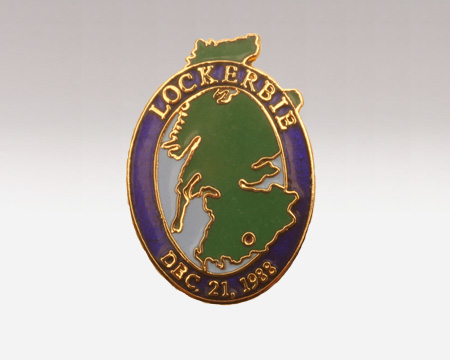
Yesterday marked the 27-year anniversary of the Pan Am 103 disaster.  On Dec. 21, 1988, a terrorist-planted bomb exploded on that flight over Lockerbie, Scotland.  All 259 on the flight were killed.  The resulting crash killed an additional 11 people on the ground.
Image result for lockerbie disaster
Pan Am flight 103, 21 Dec. 1988


We'll all certainly be discussing the attacks of September 11, 2001, with our students.  Using earlier terrorist incidents like the Pan Am 103 explosion and the 1993 World Trade Center bombing help to put that attack into historical context because the coordinated airplane hijackings on that date were but the latest incident of the use of terror by non-state groups.  This 41-second CNN clip reports that 1993 terrorist bombing:
A helpful way to introduce the subject of terrorism might be to show them a picture of this artifact.  Show them the picture of this lapel pin and ask: What symbols do you see?  What do you think each represents?  What does the word "Lockerbie" mean or signify?  Why is that date significant?  What does that circle near the bottom represent?  Why where those two colors chosen and what message do they send?  An essay accompanying the artifact's picture in the CIA Museum explains the Lockerbie explosion and story behind the lapel pin.

History in the news: When should school buildings be renamed?

Photo of Confederate General Nathan Bedford Forrest, from the U.S. Military History Institute, published online by USA Today Network on 17 Dec. 2013.
Until two years ago, a Florida public high school was named after a Confederate general who later helped form and became first Grand Wizard of the Ku Klux Klan.  Then in December 2013, Nathan Bedford Forrest High School in Jacksonville, FL, was given a new name.  The Forrest "Rebels" became the Westside High School Wolverines.

Image result for westside high school wolverines
Calls for similar actions have followed, and it seems that the velocity of these requests has increased after the June 2015 shootings of nine members of the Emanuel A.M.E. Church in Charleston, South Carolina.  My own county, Fairfax County, Virginia, in the Washington, D.C., suburbs, is facing a similar situation.  Just last week our school board amended its policy regarding when school facilities could be renamed.  Previously the policy dictated that name changes could occur only when the school building had a change in "purpose or function."  But it voted unanimously to expand the basis for school renaming to include "where some other compelling need exists."

The reason for the interest in amending an obscure school board policy may be that recent online petitions have asked the school board to change the name of schools named after J.E.B. Stuart (a Confederate general) and other Confederate leaders or opponents of school integration.

It is by no means clear yet what action our school board may or may not take regarding any of these petitions.  What is clear, though, is that this issue attracts a lot of attention, reflection, and emotion.

When we return from break our studies move ever closer to more modern historical eras and events.  It is always a good idea to find connections to the present during our consideration of the past.  We should be mindful, of course, that often times those connections will result in passionate debate and that we are responsible for ensuring that those debates are civil, informed, and respectful.